


A walk around the ramparts
The walls make a natural circuit of about 2.5 km. Start at the clock tower, follow the ramparts past the lighthouse and finish at Flag Rock for sunset.
Portuguese, Dutch, British
The Portuguese built the first fort; the Dutch rebuilt it in stone in the 17th century. Today it is a UNESCO World Heritage Site and a living town.
Things to do in Galle Fort
Inside the walls, Galle is a place for wandering. Pedlar Street and Church Street are lined with restored Dutch houses, boutiques, galleries and cafés. The Dutch Reformed Church, the old Dutch Hospital – now a shopping arcade – and the Maritime Museum tell the fort’s history, and the lighthouse on the southern tip is the most photographed building on the coast.
In the evening, the ramparts fill with families, cricket matches and couples waiting for the sunset over the Indian Ocean. Stay for dinner inside the fort, when the day visitors have gone and the streets are quiet.
Beaches near Galle
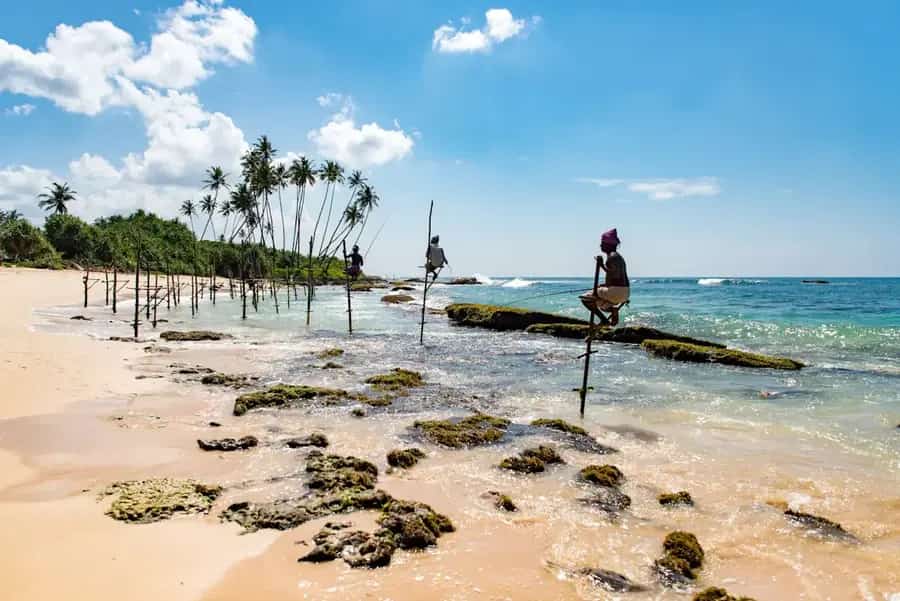
Unawatuna and Jungle Beach are 15 minutes east of the fort and good for swimming from December to April. Further along the coast, the stilt fishermen of Koggala and the whale-watching boats of Mirissa make easy half-day trips. For a quieter beach stay after the tour, we often recommend Tangalle, about 90 minutes further east.
Galle Fort at a glance
Galle Fort is a walled town on a small peninsula on Sri Lanka’s south-west coast, about two hours from Colombo on the Southern Expressway. First fortified by the Portuguese in the 16th century and rebuilt in stone by the Dutch from 1649, it is the best-preserved European fort in South and South-East Asia and a UNESCO World Heritage Site.
Unlike many heritage sites, the fort is still a living town: families, mosques, churches, schools and shops share the narrow streets with boutique hotels and cafés.
A walk around Galle Fort, step by step
Start at the Main Gate and the clock tower. Walk south along the ramparts past the Moon, Sun and Star bastions, with views over the cricket stadium and the sea. Continue to Flag Rock, once a Portuguese bastion and today a gathering place for sunset, and on to the lighthouse and the Meeran Mosque.
Turn inland along Pedlar Street and Leyn Baan Street, then up Church Street past All Saints’ Church and the Dutch Reformed Church. Finish at the Old Dutch Hospital for a cold drink. The whole loop takes about two hours at an easy pace.
Best time to visit Galle
December to April is the dry season on the south coast, with calm seas and sunny days. From May to September, the south-west monsoon brings showers and rough seas – the fort is still lovely to explore, but beaches nearby are less suitable for swimming.
Galle for a day or for a stay
Many visitors see the fort on a day trip, but staying inside the walls is a very different experience: quiet mornings, dinner in a courtyard restaurant and the ramparts at sunset without the crowds. Two nights let you combine the fort with a beach afternoon at Unawatuna or a visit to the stilt fishermen at Koggala.
Where to stay in Galle Fort
Galle Fort: questions
One night is enough to walk the fort; two to relax.
Along the coast near Koggala, about 20 minutes east.
Jungle Beach and Unawatuna are close by.