


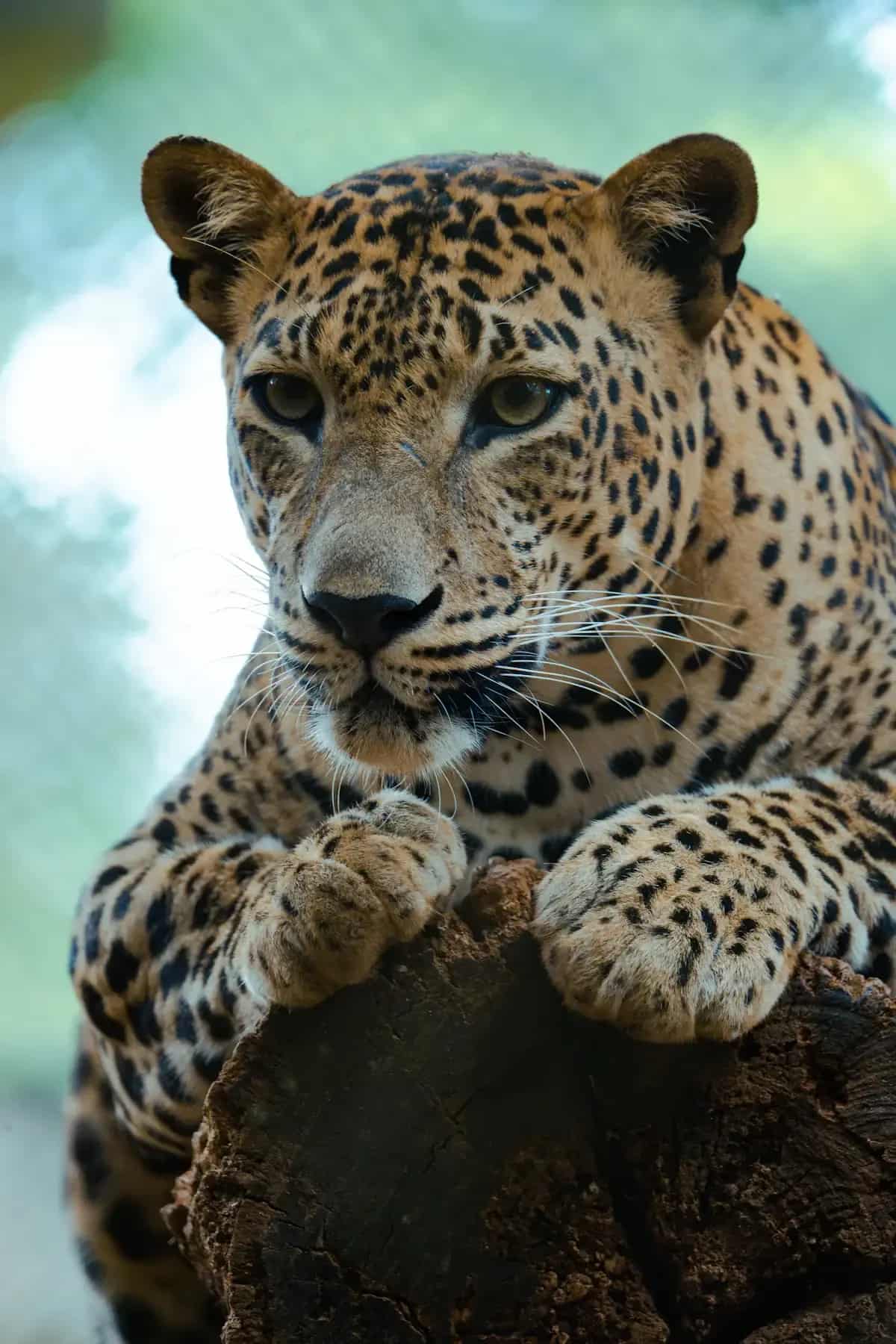
What you can see
Leopards are the star, but Yala is just as good for elephants, crocodiles, water buffalo, peacocks and hundreds of bird species.
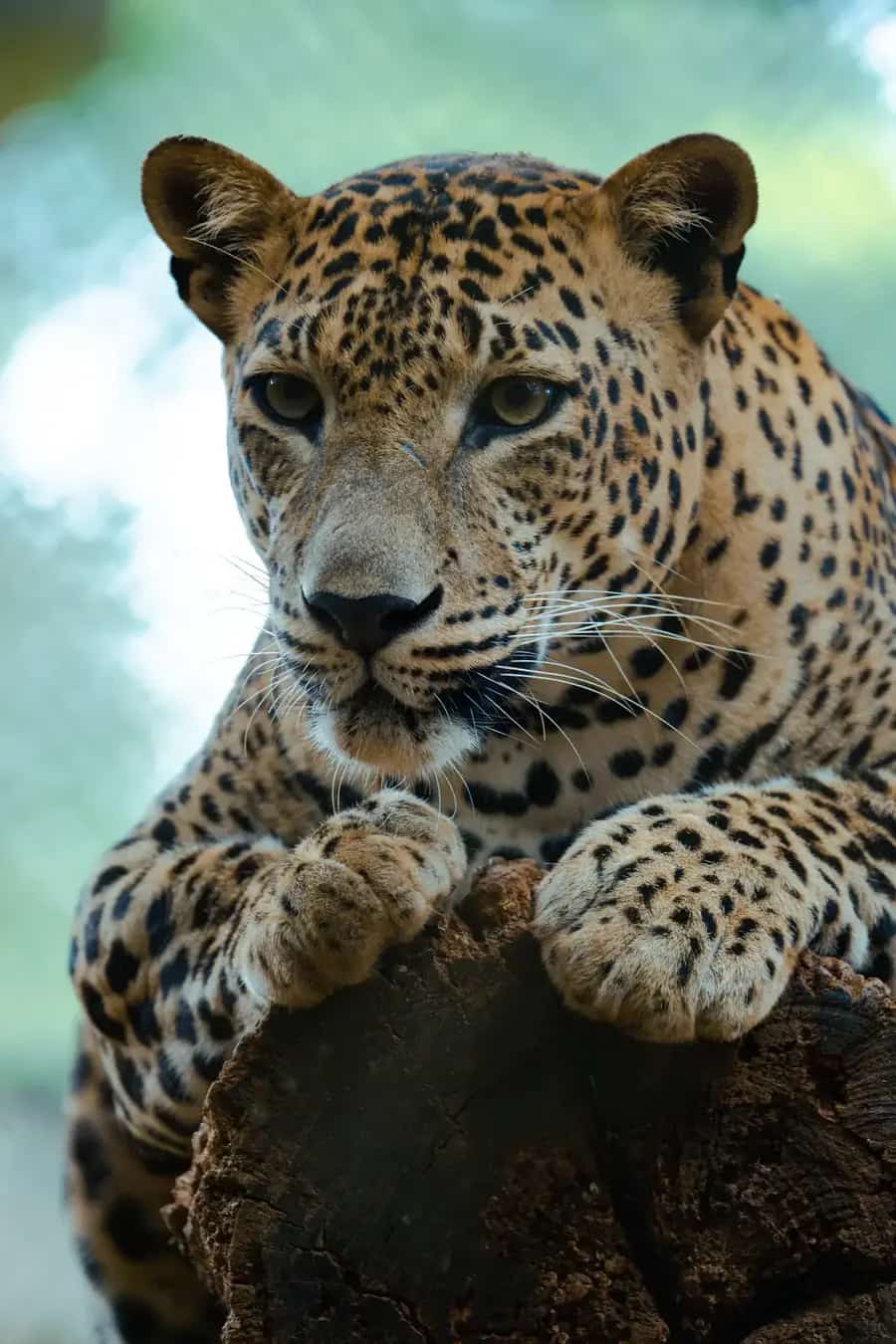
When to go
The dry months from February to July bring animals to the waterholes. Block 1, the busiest area, usually closes for part of September and October.
Making the most of a safari
Start at dawn, stay patient and keep your voice low. Two safaris give you a much better chance than one.
How a Yala safari works
Safaris are done in open 4×4 jeeps with a driver and a park tracker. A morning safari starts at dawn and returns late morning; an afternoon safari runs until the park closes at dusk. A full-day safari with a picnic lunch gives you the best chance of seeing leopards, sloth bears and the park’s quieter corners.
Yala is divided into blocks. Block 1 is the most visited and has the highest density of leopards; Block 5 and the neighbouring Lunugamvehera National Park are quieter alternatives. Our trackers choose the route according to recent sightings.
Beyond Yala
If you want elephants rather than leopards, Udawalawe National Park, two hours west, has reliable elephant sightings all year. Bundala National Park, close to the coast, is excellent for birds and crocodiles. Many of our routes combine a Yala safari with a few days on the south coast at Tangalle.
Yala National Park at a glance
Yala is Sri Lanka’s second-largest and most visited national park, covering almost 1,000 km² of dry forest, scrub, lagoons and rocky outcrops along the south-east coast. It is divided into five blocks, of which Block 1 – the original park – is the most visited and has one of the highest leopard densities in the world.
Besides leopards, the park is home to Asian elephants, sloth bears, spotted deer, sambar, wild boar, water buffalo, mugger crocodiles and golden jackals, as well as more than 200 bird species including peacocks, painted storks and the rare black-necked stork.
Yala tickets and closures
Entrance tickets are bought at the park office and include the park fee, service charge and a compulsory park tracker. Fees are set by the Department of Wildlife Conservation and change from time to time; on our tours they are included in the price. Block 1 usually closes for part of the dry season, typically around September and October, to allow the wildlife a rest. During closures, Block 5 and neighbouring Lunugamvehera remain open.
Choosing a safari
A half-day safari lasts about four hours, either from dawn or in the afternoon. Mornings are cooler with softer light; afternoons often bring animals to the water holes. A full-day safari, with breakfast and lunch inside the park, lets you explore further and wait patiently at sightings – our choice for keen wildlife watchers.
On our tours, safaris are in private or small-group jeeps with an experienced driver. We avoid jeeps that race between sightings, and we never crowd an animal.
Where to stay near Yala
Lodges are clustered around Tissamaharama and along the coast near the park entrance. Cinnamon Wild Yala sits right on the park boundary, where elephants and buffalo sometimes wander past the rooms. For a special stay, tented camps such as Wild Coast Tented Lodge offer luxury on the beach. One night is enough for a single safari; two nights allow a morning and an afternoon game drive.
Where to stay in Yala National Park
Yala National Park: questions
Chances are good, especially on two safaris – but it is never guaranteed.
Both work. Mornings are cooler; afternoons bring animals to the water.
Block 1 can be busy. Our trackers know quieter routes.