

Seven hours, one of the great railway journeys of Asia – and a slow, happy lesson in how Sri Lanka works.
Leaving Kandy
The train pulls out of Kandy mid-morning, past the backs of houses where washing hangs between banana plants and children wave from the tracks. For the first hour the line winds through villages and paddy fields, climbing gently. Vendors walk the carriages selling paper cones of spicy chickpeas, fried lentil cakes and tea poured from a kettle.
We always book reserved second-class seats for our guests. The windows open, the doors stay open, and the views are the same as in the more expensive observation car – only with the wind in your face.
Into the tea
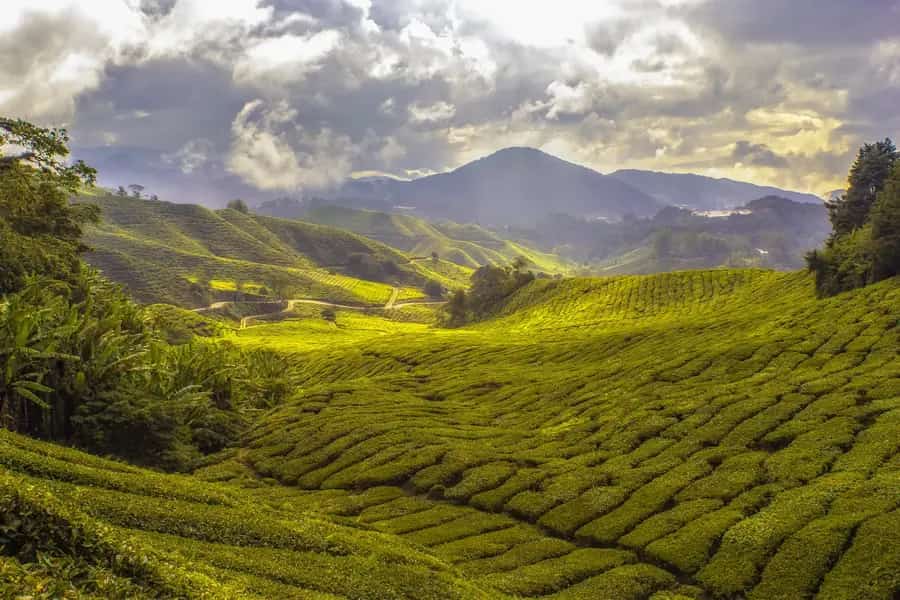
Somewhere after Hatton the landscape changes completely. Tea bushes cover every slope in neat green rows, broken by the red roofs of estate bungalows and the white chimneys of tea factories. Pickers in bright saris move slowly along the terraces with baskets on their backs. At Nanu Oya, the station for Nuwara Eliya, many passengers get on – this is where many of our guests join the train too.
Above Pattipola, the highest station on the line at almost 1,900 metres, it can be surprisingly cool. Mist rolls through the cuttings and the train disappears into short tunnels, to the delight of everyone hanging out of the doors.
The descent to Ella
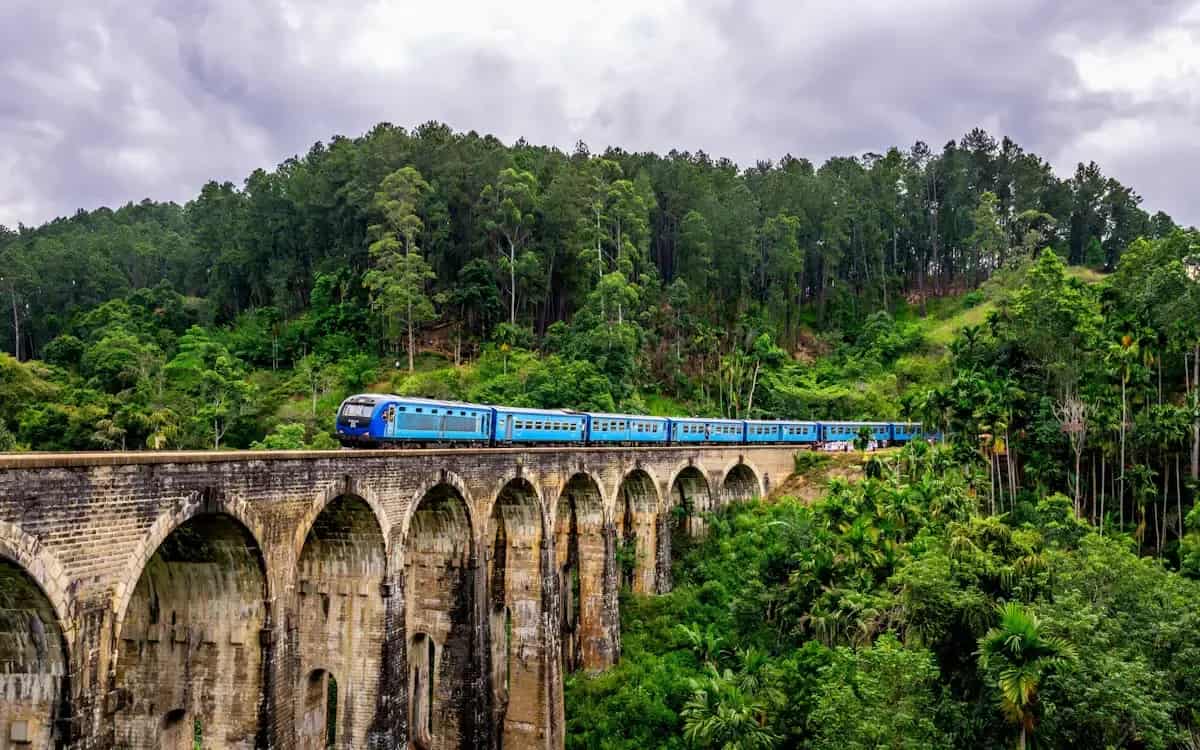
From Haputale the line drops towards Ella through some of the most dramatic scenery in the country, with views across the plains to the south coast on a clear day. Just before Ella the train crosses the Nine Arches Bridge, built from stone and brick without steel during the First World War. Arriving at Ella’s tiny station in the late afternoon, with the smell of rain and woodsmoke, is one of the best moments of any Sri Lanka holiday.