

Sri Lanka’s national dish is not one curry but a whole table of them – and every family cooks it differently. Here is what to expect, how to eat it and which other Sri Lankan dishes you should not miss.
More than one dish
Rice and curry is Sri Lanka’s national dish, yet it is not a single dish at all. It is a meal of rice and several small curries that balance each other: something mild, something fiery, something sour and something crunchy. In most homes it is served every lunchtime, and every family has its own recipes. For visitors it is the best possible introduction to Sri Lankan food and to the cuisine in Sri Lanka as a whole.
What is on the plate
A proper rice and curry lunch brings a mound of rice surrounded by five, six or more small dishes: dhal cooked with coconut milk, a fish or chicken curry, curried jackfruit or beetroot, a green leaf mallung with grated coconut, and a fiery pol sambol of coconut, chilli and lime. Papadums add crunch.
The rice may be white, red or the small-grained samba rice that many Sri Lankans prefer. Dhal, or parippu, is red lentils simmered with turmeric, curry leaves and coconut milk – mild and creamy. Vegetable curries change with the season: pumpkin, jackfruit, beans, aubergine or beetroot. In the south you will often meet ambul thiyal, a sour tuna curry made with dried goraka fruit. And on the side there is usually a sambol – coconut-based pol sambol or lunu miris, a sharp paste of onion and chilli.
How to eat it
Eat with your right hand if you want to try it the local way – mixing a little of each curry with the rice – or with a spoon and fork, which nobody minds.
The technique is simple: take a little rice, add a little curry, press it together with your fingertips and push it into your mouth with your thumb. It feels strange for three mouthfuls and natural after that. The left hand stays off the plate. A useful tip: try each curry on its own with a little rice before you start combining them, so you notice how the sour, sweet and spicy flavours play together.
How spicy is it?
Cooks often tone things down for visitors. If you prefer it mild, just say “less spicy” – or the opposite if you want the real thing. The heat lives mainly in the sambols and in meat and fish curries; dhal and pumpkin curry are almost always gentle. If something is too hot, more rice or a sip of a yoghurt drink helps far more than water.
Sri Lankan dishes you should try
Hoppers, or appa, are bowl-shaped pancakes of rice flour and coconut milk with crisp, lacy edges. Crack an egg into the middle and you have an egg hopper – the perfect breakfast or evening snack.
String hoppers are delicate nests of steamed rice noodles, eaten for breakfast with dhal, a light curry and coconut sambol. Kottu roti is chopped roti fried with vegetables, egg and meat on a hot griddle, cut with two metal blades – you hear a kottu stall long before you see it.
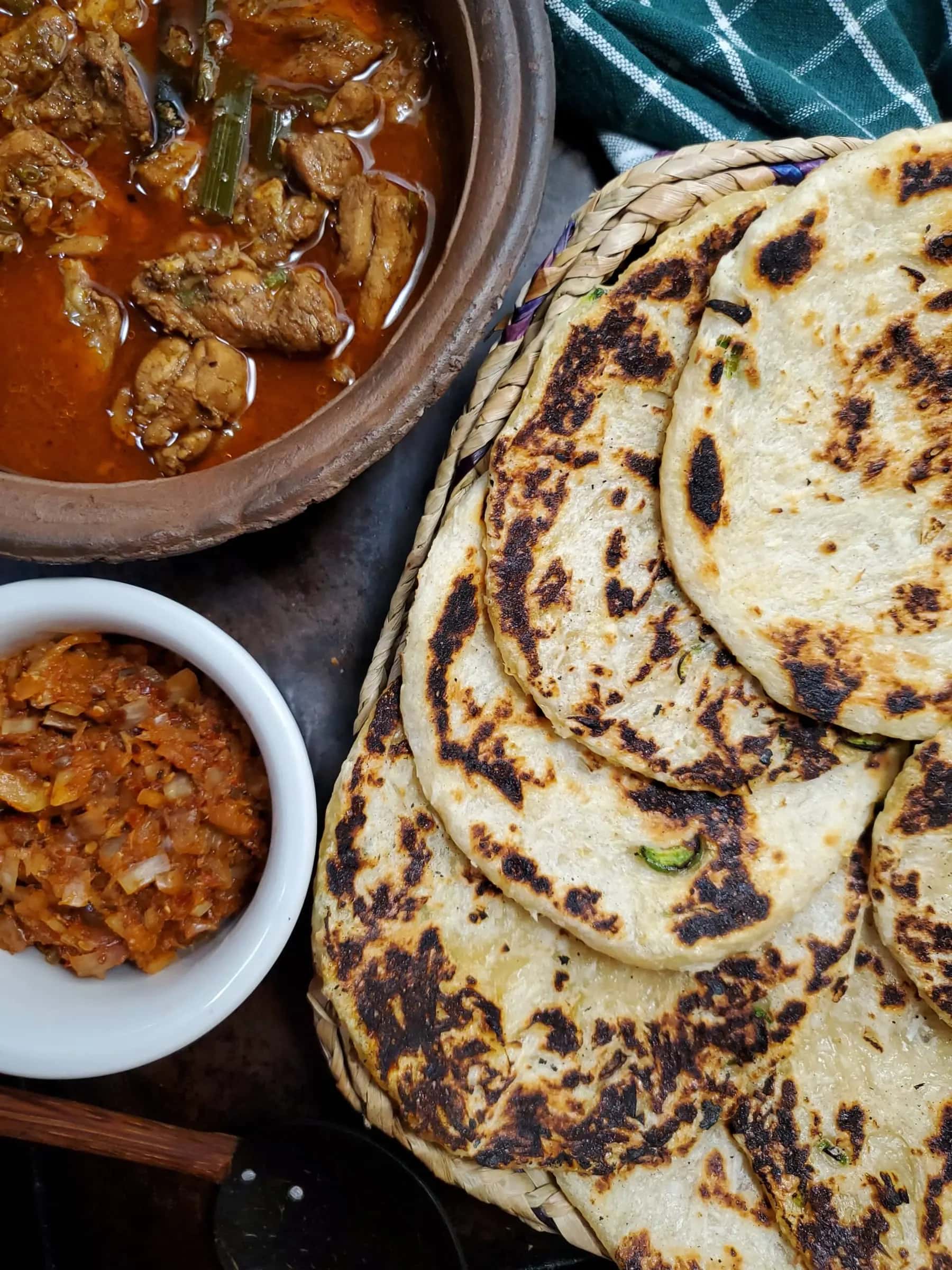
Lamprais is rice and several curries wrapped in a banana leaf and baked, a legacy of the island’s Dutch Burgher families. Pol roti is a flatbread made with grated coconut, perfect with curry or lunu miris. Kiribath, rice cooked in coconut milk, is served on festive days and on the morning of the Sinhala and Tamil New Year. And for dessert there is watalappan, a rich pudding of coconut milk, jaggery and spices.
The food photos in this story are by Roshani Wickramasinghe, who shares wonderful recipes and stories from Sri Lankan kitchens on her blog Hungry Lankan – a lovely place to get inspired before or after your trip.
What to drink
With meals most Sri Lankans drink water or fresh juice – lime, passion fruit or mango. Hugely popular is king coconut, the orange drinking coconut that vendors open with a machete at the roadside: refreshing and full of minerals. Tea follows almost every meal, black or with milk and sugar. If you want something local, try Sri Lankan ginger beer, and in the hotels there is beer and wine with dinner.
A day of eating and Sri Lankan street food
A Sri Lankan day often starts savoury: string hoppers or hoppers with dhal and sambol, with sweet milky tea. Lunch is rice and curry, dinner something lighter such as kottu or roti. In between there are short eats – fish buns, samosas and fried lentil cakes – piled up in glass cabinets in every bakery. And everywhere there is fresh fruit: mango, pineapple, papaya, rambutan and small, sweet bananas.
Regional differences
In the south people eat more fish and like their curries sour. Hill-country cooking is a little milder, while in the Tamil north around Jaffna families use their own spice blends, often hotter than anywhere else on the island. Sri Lankan Muslim cooking brings biryani and meat dishes perfumed with cardamom and cinnamon. Travel around the island and you eat your way through several cuisines.
Vegetarian and vegan
If you don’t eat meat, Sri Lanka is easy. Many curries are vegetarian anyway, and many are vegan too, because coconut milk is used instead of cream. Just tell your guide – they will order for you and explain what is in each dish. We can also help with allergies: hotels will cook without nuts or gluten on request.
Learning to cook it
On several of our tours, guests spend an afternoon cooking with a family, starting with a walk through the garden to pick curry leaves, pandan and chillies. You grind spices on a stone, scrape coconut and learn why Sri Lankan curry powder is roasted darker than Indian. Then everyone sits down to eat together.
If food is one of the main reasons you travel, tell us. We will plan a route with markets, a cooking class and the places our own team likes to eat.
A few last tips
Don’t drink tap water – bottled water is available everywhere and is always on board our vehicles. Try fruit from roadside stalls, ideally peeled. In simple local restaurants rice and curry is often only cooked at lunchtime; in the evening they serve kottu and roti instead. And finish with a cup of Ceylon tea – it tastes best in the hill country.